
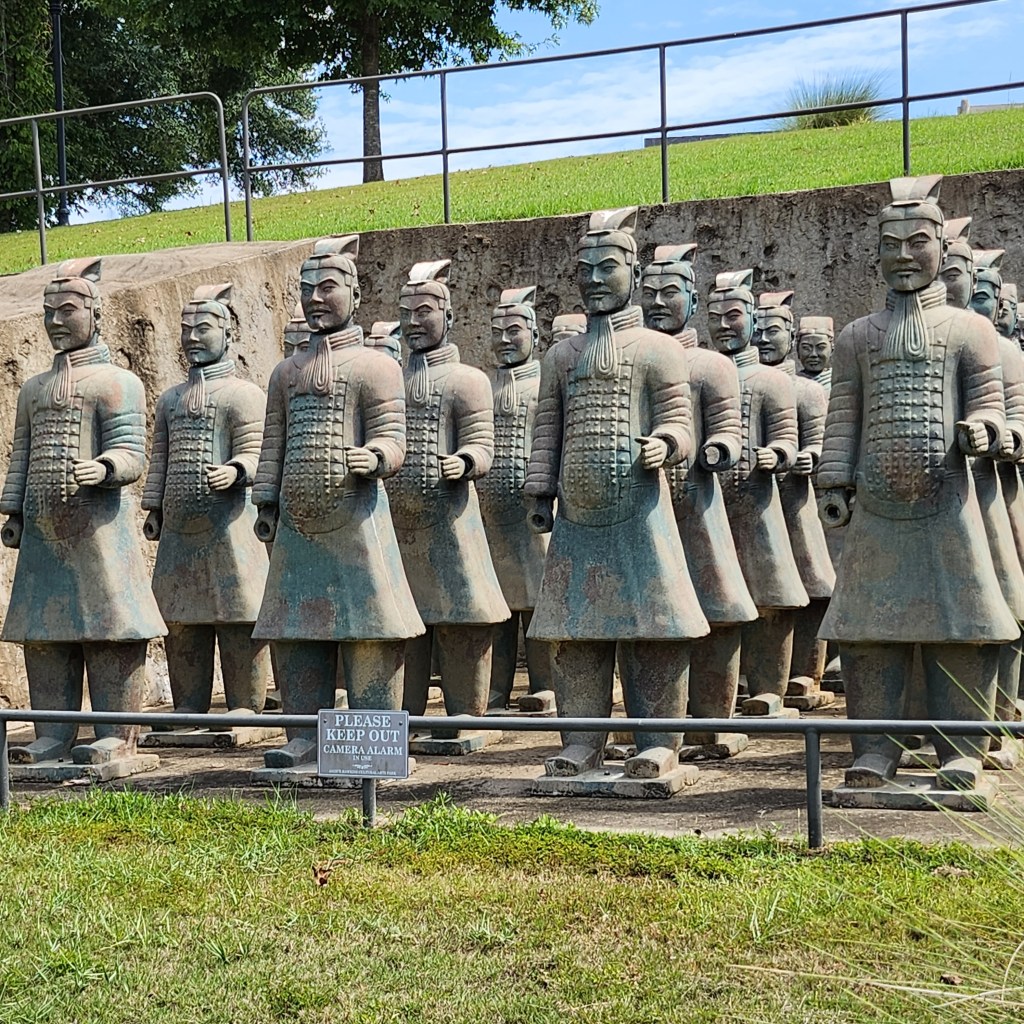
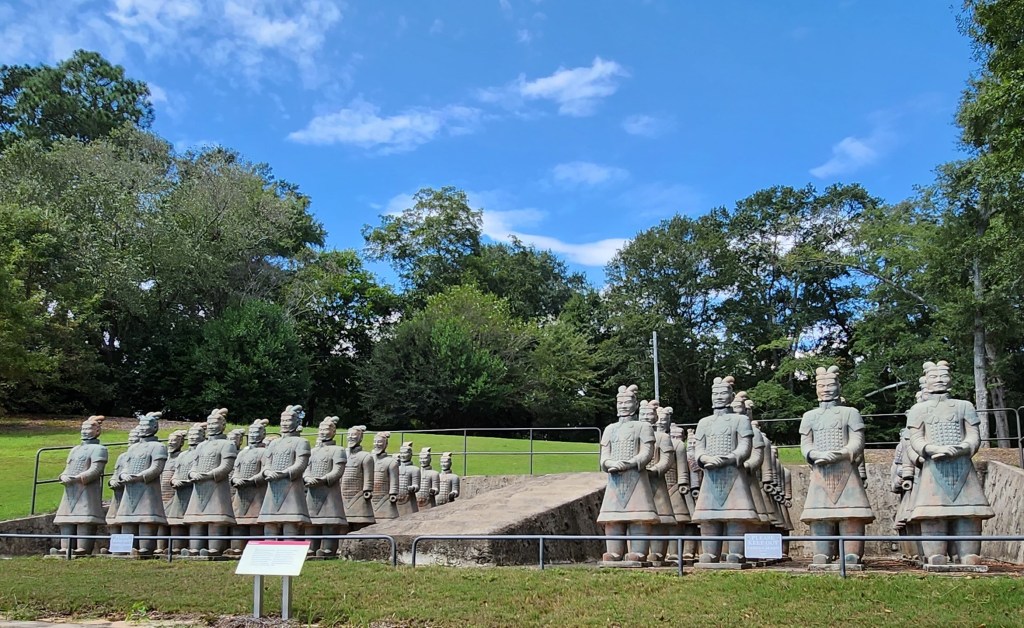
After writing about one of Alabama’s most unique attractions during the pandemic, I finally got to see it in person. I went to see the replica of the ancient Terracotta Army this week at Troy University’s International Arts Center.
It was as fascinating as I expected. In China, more than 8,000 life-size soldiers made from terracotta were modeled and painted to fill the tomb of the country’s first emperor, Qin Shi Huang Di, to protect him in the afterlife. He was buried in 209 BCE and the contents of his tomb took more than three decades to complete. Archaeologists were stunned to unearth the army, which included chariots and horses, in 1974.
(Photo by Kelly Kazek)
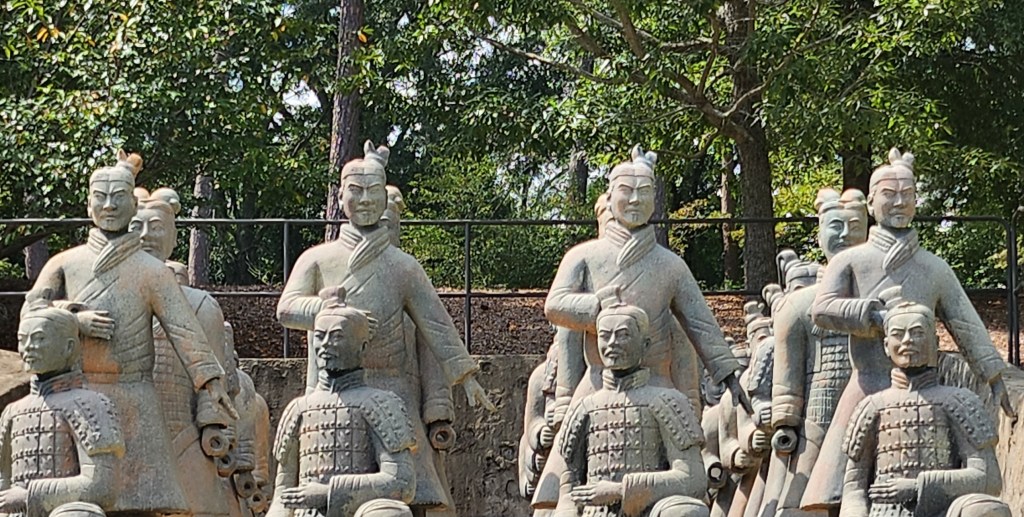
So how did 200 replicas of these soldiers end up in Troy, Alabama? The artist who created the replicas, Dr. Hua Bao Zhu, is a friend of and frequent visitor to the university. He has donated enough artworks, including the warriors, to have a gallery in his name at the International Arts Center. The artist became friends with Troy University Chancellor Jack Hawkins, who visited China to help establish a degree program in conjunction with a university there.
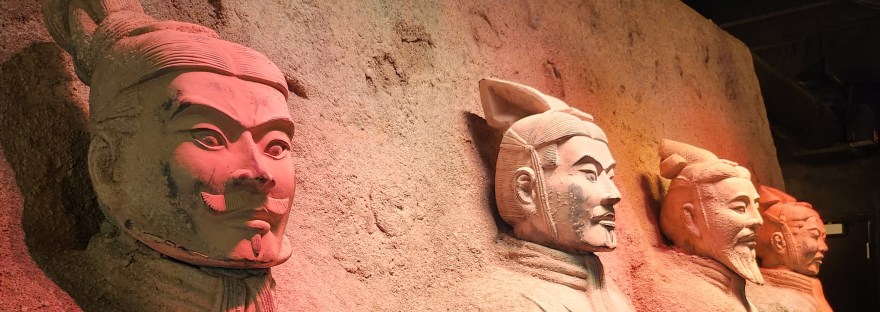
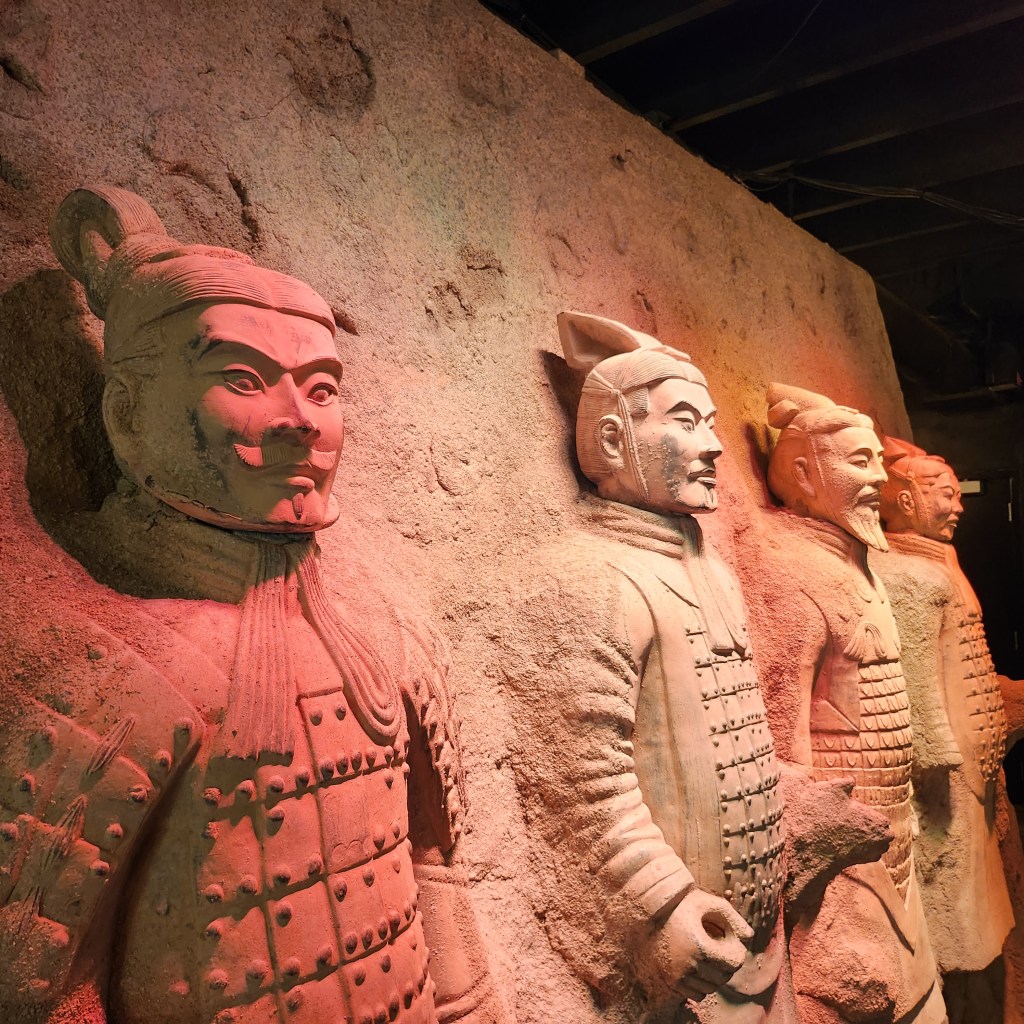
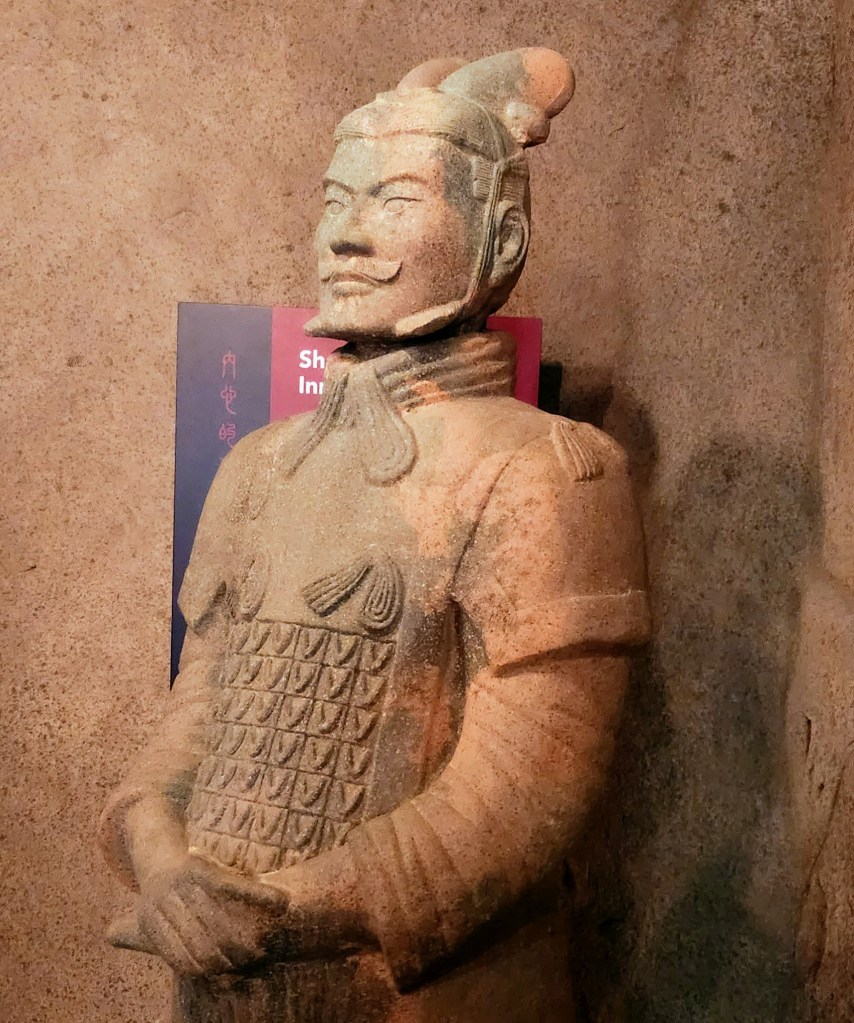
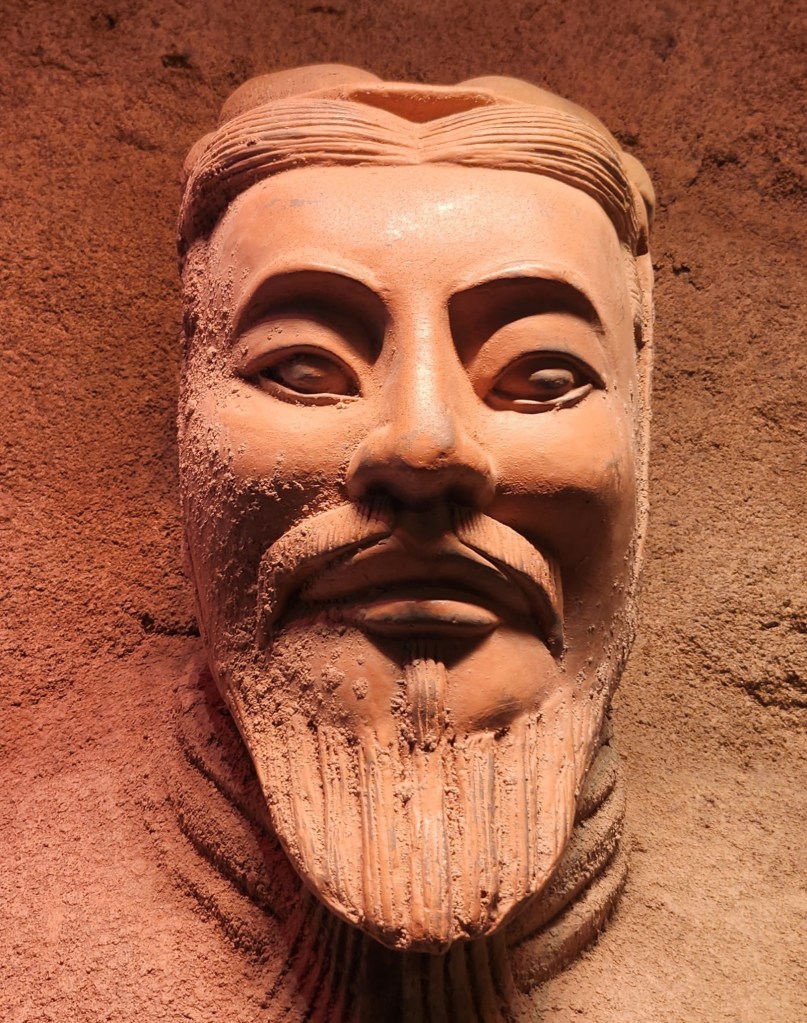
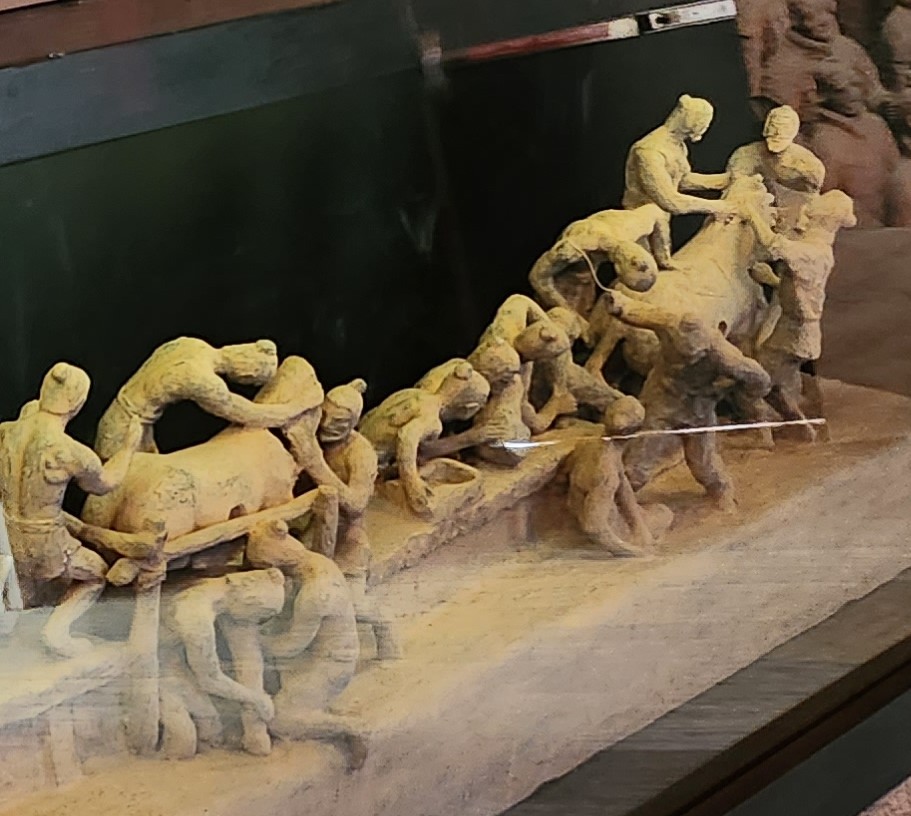
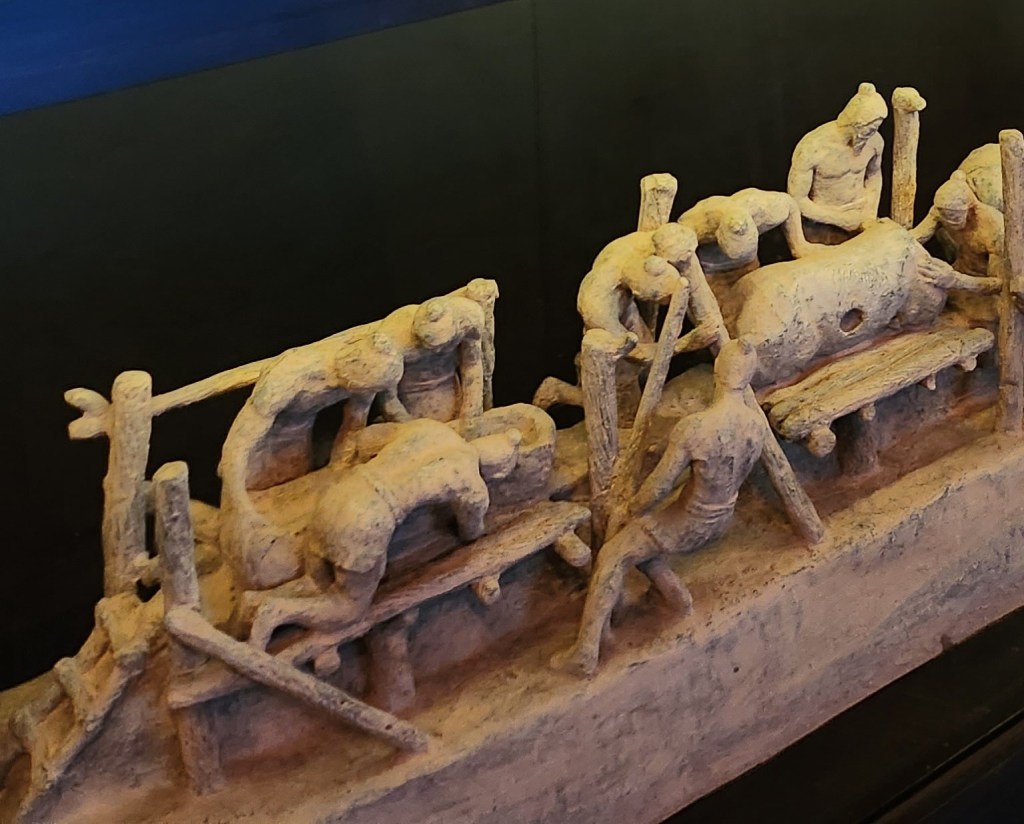
The Terracotta Army exhibit includes the 200 warriors that surround the amphitheater and lake outside the museum. Indoors, you can see replicas as they might have looked while being unearthed, short videos explaining some of the processes used, photos of the original site in China and a diorama showing how workers would have created the figures for the massive army.
The original archaeological find is known as the “eighth Wonder of the World.”

 KellyKazek.com
so interesting, thanks for sharing.
LikeLike